At the beginning of February, you all did a fantastic job on helping set out all 40 of the coverboards. Hopefully when I come back we will be able to find all kinds of salamanders and other amphibians under them. As the weather warms up, we should find a few small snakes as well. If you want to read more about the Catawba River Corridor Coverboard Project, which Woodlawn School is now a part of, you can go here.
| Explaining how to set out the coverboards and then taking a GPS reading. GPS (Global Positioning System) units use satellites to pinpoint our location. This is important for the coverboard project so we know which species we find where. | 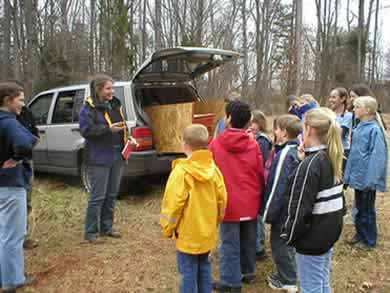 |
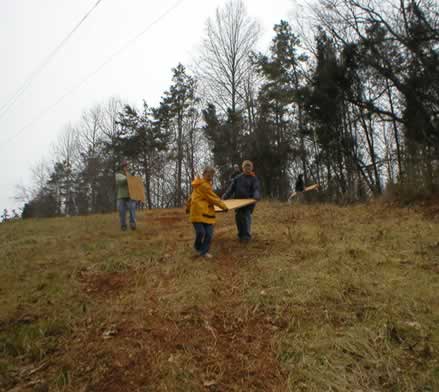 |
Helping bring down the coverboards into the ravine. It was important to pick a variety of microhabitats to lay the boards so that we could be sure to include as as many possible places that a salamander or another animal may want to live. We lay the boards near the power lines, because this provided a good edge environment. |