
B.S., Davidson College (cum laude)
Watson Fellow, 1984
Ph.D., The Johns Hopkins University
Postdoctoral Fellow, The Johns Hopkins University
Research Associate, Washington University
PEW Visiting Assistant Professor of Biology, Macalester College, MN
Assistant Professor of Biology, Davidson College 1994 - 2000
Visiting Scholar Duke University, Cell and Molecular Biology Program 1999-2000
Associate Professor of Biology, Davidson College 2000 - 2007
Professor of Biology, Davidson College as of 2007
Professional Organizations:American Society of Cell Biology (ASCB),
Project Kaleidoscope Faculty for the 21st Century (PKAL
F21), Association for Biology Laboratory Education (ABLE),
Director of the Genome Consortium for Active Teaching (GCAT),
American Association for the Advancement of Science (AAAS). Co-Editor-In-Chief of Cell
Biology Education: A Journal of Life Science Education.
From July 1, 2002 to December, 2005.
Senior Editor of CBE- Life Sciences Education. December 2005 to present.
Publications:
A. Malcolm Campbell and Laurie J. Heyer. 2006. Discovering Genomics, Proteomics & Bioinformatics Second Edition. Published jointly by Cold Spring Harbor Laboratory Press and Benjamin Cummings. 447 pages. ISBN 0-8053-8219-4
A. Malcolm. Campbell and Laurie J. Heyer. 2006. Instructor’s Guide to “Discovering Genomics, Proteomics & Bioinformatics”. Benjamin Cummings. in press.
A. Malcolm Campbell and Laurie J. Heyer. 2002. Discovering Genomics, Proteomics & Bioinformatics. Published jointly by Cold Spring Harbor Laboratory Press and Benjamin Cummings. 352 pages. ISBN 0-8053-4722-4
A. Malcolm. Campbell. 2002. Instructor’s Guide to “Discovering Genomics, Proteomics & Bioinformatics”. Benjamin Cummings. 136 pages. ISBN: 0805347267
Baumgardner, Jordan*, Karen Acker*, Oyinade Adefuye*, Samuel
Thomas Crowley*, Will DeLoache*, James O. Dickson*, Lane Heard*, Andrew
T. Martens*, Nickolaus Morton*, Michelle Ritter*, Amber Shoecraft*, Jessica
Treece*, Matthew Unzicker*, Amanda Valencia*, Mike Waters*, A. Malcolm
Campbell, Laurie J. Heyer, Jeffrey L. Poet and Todd T. Eckdahl. 2009.
Solving a Hamiltonian
Path Problem with a Bacterial Computer. Journal
of Biological Engineering. Vol. 3:11
Highly Accessed
Paper. ![]()
Bakke*, Peter, Nick Carney*, Will DeLoache*, Mary Gearing*,
Kjeld Ingvorsen, Matt Lotz*, Jay McNair*, Pallavi Penumetcha*, Samantha
Simpson*, Laura Voss*, Max Win*, Laurie J. Heyer, A. Malcolm Campbell.
2009.
Evaluation
of Three Automated Genome Annotations for Halorhabdus utahensis.
PLoS ONE. Vol 4 (7): e6291. doi:10.1371/journal.pone.0006291.
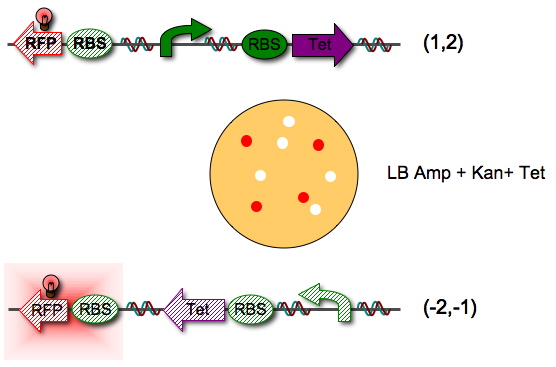
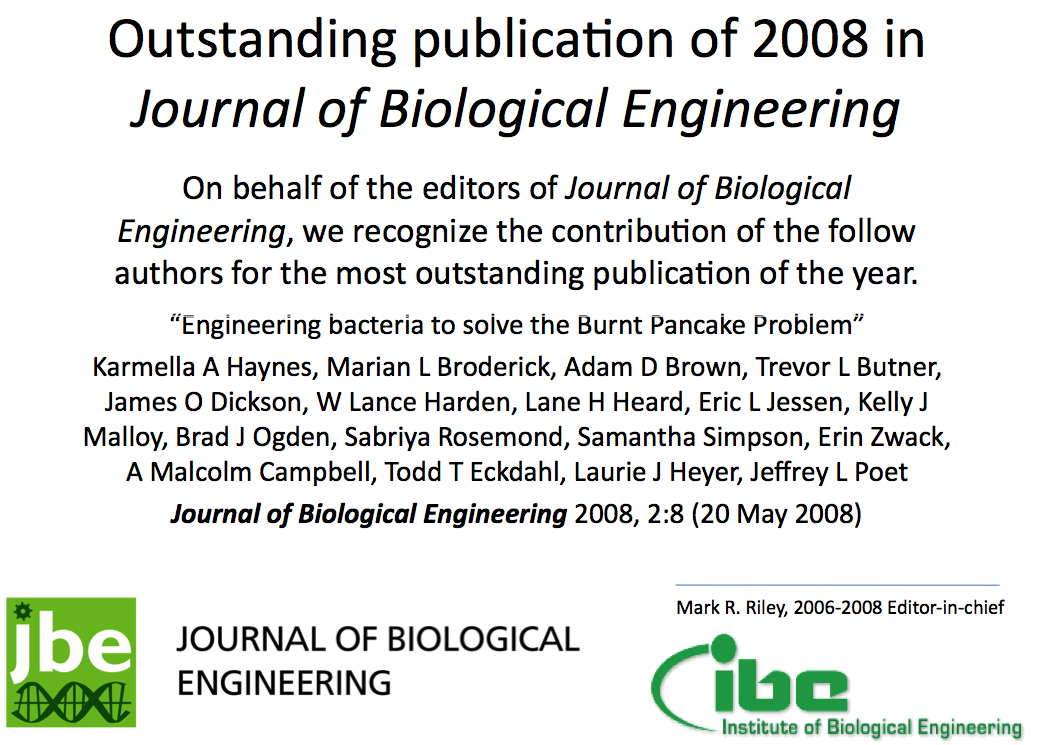
Haynes, Karmella A., Marian L. Broderick*, Adam D. Brown*, Trevor L. Butner*, James O. Dickson*, W. Lance Harden*, Lane H. Heard*, Eric L. Jessen*, Kelly J. Malloy*, Brad J. Ogden*, Sabriya Rosemond*, Samantha Simpson*, Erin Zwack*, A. Malcolm Campbell, Todd T. Eckdahl, Laurie J. Heyer and Jeffrey L. Poet. 2008. Engineering bacteria to solve the Burnt Pancake Problem. Journal of Biological Engineering. Vol. 2(8): 1 – 12. JBE's Outstanding Paper of 2008.
K.A. Haynes, M.L. Broderick*, A.D. Brown*, T.L. Butner*, L. Harden*, L. Heard*, E. Jessen*, K. Malloy*, B. Ogden*, S. Rosemond*, S. Simpson*, E. Zwack*, A. M. Campbell, T. Eckdahl, L.J. Heyer and J.L. Poet. 2007. Computing with living hardware. IET Synth. Biol., 1: (1–2), pp. 44–47.
Campbell, A.Malcolm, William T. Hatfield, and Laurie J. Heyer. 2007. Letter to the Editor: Make Microarray Data with Known Ratios. CBE - Life Sciences Education. Vol. 6: 196 - 197.
Campbell, A.Malcolm, Mary Lee S. Ledbetter, Laura L. M. Hoopes,Todd T. Eckdahl, Laurie J. Heyer , Anne G. Rosenwald, Edison Fowlks, Scott Tonidandel, Brooke Bucholtz*, and Gail Gottfried. 2007. Genome Consortium for Active Teaching: Meeting the Goals of BIO2010.CBE - Life Sciences Education. Vol. 6: 109 –118. Appendix A, Appendix B, Appendix C, Appendix D.
Campbell, A.Malcolm, Carolyn A. Zanta, Laurie J. Heyer, Ben Kittinger*, Kathleen M. Gabric, and Leslie Adler. 2006. DNA Microarray Wet Lab Simulation Brings Genomics into the High School Curriculum. CBE - Life Sciences Education. Vol. 5, 332–339.
Campbell, A.Malcolm and Barbara Lom. 2006. A Simple E-Mail Mechanism To Enhance Reflection, Independence, and Communication in Young Researchers. CBE - Life Sciences Education. Vol. 5, 318–322.
Campbell, A.M., T.T. Eckdahl, E. Fowlks, L.J. Heyer, L.L. Mays Hoopes, M.L. Ledbetter, A.G. Rosenwald. 2006. Genome Consortium for Active Teaching (GCAT). Science 311, 1103-1104. (supporting online materials)
Eisen, Arri, Janet M. Batzli, David Becker, Douglas M. Fambrough, Rebecca Pearlman, Richard Shingles, Rae Brosnan, Mary Lee Ledbetter, and A. Malcolm Campbell. Points of View: A Survey of Survey Courses. Cell Biology Education. 2005. Vol. 4: 123 - 137.
Campbell, A. M. Meeting Report: Synthetic Biology Jamboree for Undergraduates Cell Biology Education. 2005. Vol. 4: 19 - 23.
Heyer, L.J., D.Z. Moskowitz*, J.A. Abele*, P. Karnik*, D. Choi*, A. M. Campbell, E.E. Oldham*, and B.K. Akin.* 2005. MAGIC Tool: Integrated microarray data analysis. Bioinformatics: 21 (9): 2114 - 2115.
Campbell, A. M. Open Access: A PLoS for Education. PLoS Biology. 2004. Vol. 2 (5): 560-563. (PDF Version)
Campbell, A. M. Public Access for Teaching Genomics, Proteomics, and Bioinformatics. Cell Biology Education. 2003. Vol. 2: 98- 111.
Campbell, A. M. Meeting Report: Genomics in the Undergraduate Curriculum-Rocket Science or Basic Science? Cell Biology Education. 2002. Vol. 1: 70 - 72.
Campbell, A. M., Coble*, A. J., Ch'ng*, T.H., Cohen*, L.D., Long*, E. M., Russo*, K. M. and Armbrust, E. V. Identification and DNA sequence of a new H+-ATPase in the unicellular green alga Chlamydomonas reinhardtii (Chlorophyceae). Journal of Phycology. 2001. 37: 536-542.
Wessner, D. R., P. C. Maiorano, J. Kenyon, R. Pillsbury, and A. M. Campbell. Spot-overlay Ames Test of Potential Mutagens. Pgs. 1-18, in Tested Studies for Laboratory Teaching, Volume 22 (S. J. Karcher, ed.). Proceedings of the 22nd Workshop/Conference of the Association for Biology Laboratory Education. 2000.
Campbell, A. Malcolm. " New Paradigms: Teaching In Context and on a Need-to-Know Basis" In HMS Beagle: The BioMedNet Magazine. (2000) Adapt or Die Section, Issue 78. <http://www.biomednet.com/hmsbeagle/78/notes/adapt>.
Williamson, J. H., and Campbell, A. M. Isocitrate Dehydrogenase Investigation. Biology Lab Clearinghouse. Accessed 17 October, 2000.
Mooney*, E. and Campbell, A. M. A Project-Based Biotechnology Laboratory Course using Isocitrate Dehydrogenase. BioScene. 25 (2): 3 - 11. 1999.
Campbell, A. M. Unifying the Curriculum: Isocitrate Dehydrogenase (IDH) as a Model Enzyme. in Tested Studies for Laboratory Teaching. Edited by Susan J. Karcher. (1999) Volume 20: 352.
Williamson, J. H. and Campbell, A. M. Isocitrate Parameters of Enzyme Activity. in Tested Studies for Laboratory Teaching. Edited by Susan J. Karcher. (1999) Volume 20: 137 - 163.
Campbell, A. M. (1999) Malaria evades immunity with genetic variability. SCOPE Malaria Research and Policy Forum (Commentary Article, 23 August)
Campbell, A. Malcolm, and Blauch, David N. Virtual Questions. Science. (1999) Volume 285: 354.
Campbell, A. Malcolm. "Pictures of Life: Using Web Images to Teach Biology" In HMS Beagle: The BioMedNet Magazine. (1999) Adapt or Die Section, Issue 51 <http://www.biomednet.com/hmsbeagle/51/labres/adapt.htm>.
Campbell, A. Malcolm. "One Enzyme Fits All" In HMS Beagle: The BioMedNet Magazine. (1999) Adapt or Die Section, Issue 47. <http://www.biomednet.com/hmsbeagle/47/labres/adapt.htm>
Campbell, A. Malcolm. "How to Get a Teaching Job at a Primarily Undergraduate Institution" Biotechnology Software and Internet Journal. (1998) Volume 15, no. 4, pp 8 - 14.
Davis*, Karen R., and Campbell, A. Malcolm. Biological Animations: A Comparison of Morph 2.5 and GifBuilder 0.5 Biotechnology Software and Internet Journal. (1998) Volume 15, no. 4, pp 15-17 and 39.
Campbell, A. Malcolm. "Home Page Homework: Redefining the Term Paper" In HMS Beagle: The BioMedNet Magazine. (1998) Adapt or Die Section, Issue 35, July 24. <http://biomednet.com/hmsbeagle/35/labres/adapt.htm>.
Campbell, A. Malcolm. "A weight off your mind." Book Review of "Essential Cell Biology". Trends In Cell Biology. (1998) Volume 8, no. 8, pp. 336-337.
Campbell, A. Malcolm. "Virtual Reprints" In HMS Beagle: The BioMedNet Magazine. (1998) Adapt or Die Section, Issue 31, May 29. <http://biomednet.com/hmsbeagle/1998/31/labres/adapt.htm>.
Campbell, A. Malcolm. "Careers-perspective interview". Interview in Trends in Cell Biology. (1998) Volume 8, no. 3, pg. 127.
Campbell, A. Malcolm. "Walking on the Web Without Getting Stuck" Biotechnology Software and Internet Journal. (1997) Volume 14, no. 4, pp. 18 - 19.
Campbell, A. Malcolm. "How to Get a Teaching Job at a Primarily Undergraduate Institution" (Association for Women in Science) AWIS Magazine. (1997) Volume 26 (2), pp. 22 - 27.
Campbell, A. Malcolm. "Question Mark" Biotechnology Software and Internet Journal. (1997) Volume 14, no. 2, pp. 29 - 33.
Campbell, A. M., Williamson, J. H., and Padula, D. "Use PCR and a Single Hair to Produce a 'DNA Fingerprint" in Tested Studies for Laboratory Teaching. Edited by Jon C. Glase. (1997) Volume 18: 1-31.
Campbell, A. M., Williamson, J. H., Padula, D., and Sundby, S. "Use PCR and a Single Hair to Produce a "DNA Fingerprint". American Biology Teacher. (1997) 59 (3): 172 - 178.
Williamson, J. H., and Campbell, A. M. DNA Technology in the Classroom: A Circular Map of Bacterial Plasmid. American Biology Teacher. (1997) 59 (3): 164 - 170.
Campbell, A. Malcolm. "How to Get a Teaching Job at a Primarily Undergraduate Institution". American Society for Cell Biology publication for its members, 1996. (Bethesda: The American Society for Cell Biology, 1996.
Campbell, A. Malcolm. "MacPlasmap 2.1" Biotechnology Software Journal. (1996) Volume 13, no. 2, pp. 14-16.
Brockman*, Mark, Ordman, Alfred B., and Campbell, A. Malcolm. Research in Undergraduate Instruction: A Biotechnology Laboratory Project for Recombinant DNA Protein Expression in Bacteria. Journal of Chemical Education. (1996) Journal of Chemical Education 73 (6): 542-3.
Campbell, A. M., Rayala*, H., and Goodenough, U. W. 1995. The iso1 Gene of Chlamydomonas Is Involved in Sex Determination. Molecular Biology of the Cell 6 (1): 87 - 95.
Goodenough, U.W., Armbrust, E.V., Campbell, A.M., and Ferris, P.J. 1995. Molecular genetics of sexuality in Chlamydomonas. Annual Review of Plant Physiology and Plant Molecular Biology (1995) Volume 46. pp. 21 - 44.
Campbell, A.M., Wuytack, F., and Fambrough, D. M. 1993. Differential distribution of the alternative forms of the sarcoplasmic/endoplasmic reticulum Ca2+-ATPase, SERCA2b and SERCA2a, in the avian brain. Brain Research 605:67-76.
Campbell, A.M. 1993. The Teacher-Scholar Fellowship as a model for attracting new faculty to undergraduate institutions. Biochemical Education 21:190-2.
Campbell, Malcolm. 1993. Job Interviews at Undergraduate Institutions: What can you do about them? Council on Undergraduate Research Newsletter 13 (4): 25-30.
Campbell, A. M., Kessler, P. D. and Fambrough, D. M. 1992. The Alternative Carboxyl Termini of Avian Cardiac and Brain SR/ER Ca2+-ATPases Are on Opposite Sides of the Membrane. Journal of Biological Chemistry 267: 9321- 9325.
Campbell, A. M., Kessler, P. D., Sagara, Y., Inesi, G. and Fambrough, D. M. 1991 Nucleotide Sequences of Avian Cardiac and Brain SR/ER Ca2+-ATPases and Functional Comparisons with Fast Twitch Ca2+-ATPase: Ca2+ Affinities and Inhibitor Effects. Journal of Biological Chemistry 266: 16050-16055.
Campbell, A. M., Kessler, P. D. and Fambrough, D. M. 1991 Alternately Spliced cDNA's Encode the Chicken Sarco/Endoplasmic Reticulum Slow Ca2+-ATPase. The Sodium Pump: Recent Developments eds. Jack H. Kaplan and Paul De Weer. pp 107-109.
Kaprielian, Z., Campbell, A. M., and Fambrough, D. M. 1989 Identification of a Ca2+-ATPase in Cerebellar Purkinje cells. Molecular Brain Research 6: 55-60.
Abstracts: ( * denotes undergraduates as co-authors)
Samantha Simpson, Laurie J. Heyer and A. Malcolm Campbell. “Inserting
a Competency Regulatory Gene into E. coli.” Institute of Biological
Engineering 2009 Annual Conference. Santa Clara, CA. March 19 – 21.
Laurie J. Heyer, A. Malcolm Campbell, Christopher J. Paradise, “Lost and Found: Integrating Math and Biology in the First-Year Curriculum.” 2009 AAAS Annual Meeting, Chicago IL, 12-16 Feb 2009.
Alicia Allen*, James Barron*, Robert Cool*, Kelly Davis*, Will DeLoache*, Erin Feeney*, Andrew Gordon*, John Igo*, Aaron Lewis*, Kristi Muscalino*, Madeline Parra*, Pallavi Penumetcha*, Karlesha Roland*, Max Win*, Xiao Zhu*, A. Malcolm Campbell, Todd Eckdahl, Laurie Heyer, Jeff Poet. 2008. E. nigma: XOR Gates, a Bacterial Hash Function, and Viz-A-Brick. International Genetically Engineered Machines Competition (iGEM2008). MIT, Boston, MA. Nov. 8-9, 2008. (Gold Medalists)
Karmella A. Haynes, Oyinade Adefuye*, Jordan Baumgardner*, Tom Crowley*, Will Deloache*, James O. Dickson*, Lane H. Heard*, Andrew Martens*, Nickolaus Morton*, Michelle Ritter*, Amber Shoecraft*, Jessica Treece*, Matthew Unzicker*, Amanda Valencia*, Mike Waters*, A. Malcolm Campbell, Todd Eckdahl, Laurie Heyer, Jeffrey Poet. 2008. Solving the Hamiltonian Path Problem with Living Hardware. Institute of Biological Engineering Annual Meeting. Chapel Hill, NC. March 6 – 9.
A. Malcolm Campbell, Laurie J. Heyer, Mary Lee S. Ledbetter, Laura L. M. Hoopes, Todd T. Eckdahl, Anne G. Rosenwald, Edison Fowlks, Nicholas Dovidio*, Michael R. Gordon*, David Moskowitz*, Mackenzie L. Cowell*, J. Adam Abele*, Brian Akin*, Gavin Taylor*, Danielle Choi*, Parul Karnik*, Peter Lowry*, Jennifer M. Madden*, Emily E. Oldham*, B. Daniel Pierce*, Allison Amore*, Sheena Bossie*, Max Citrin*, Erin Cobain*, Megan McDonald*, Marieta Solé*, Emily Wilson*, Matt Gemberling*, Kristen DeCelle*, Karen Acker*, Lyana Buckwold*, Benjamin Whigham*, Carolyn A. Zanta, Kathleen M. Gabric, Ben Kittinger*, Lesli Adler, A. Jackie Ryan*, William T. Hatfield. 2007. Microarrays for the Masses: Pedagogical Resources for High School through College. American Society for Cell Biology Annual Meeting. San Francisco, CA. December 1 - 5.
Oyinade Adefuye, Will DeLoache, Jim Dickson, Andrew Martens, Amber Shoecraft, Mike Waters, Jordan Baumgardner, Tom Crowley, Lane Heard, Nick Morton, Michelle Ritter, Jessica Treece, Matt Unzicker, Amanda Valencia, Todd Eckdahl, Karmella Haynes, Laurie Heyer, Jeff Poet, A. Malcolm Campbell. 2007. Living Hardware to Solve the Hamiltonian Path Problem. International Genetically Engineered Machines Competition (iGEM 2007). MIT, Boston, MA. Nov. 3-4, 2007. (Gold Medalists)
Haynes, K.A., Broderick*, M.L., Brown*, A.D., Butner*, T.L., Harden*, L., Heard*, L., Jessen*, E., Malloy, K., Ogdenv, B., Rosemond*, S., Simpson*, S., Zwack*, E., Campbell, A.M., Eckdahl, T., Heyer, L.J., Poet, J. Computing With Living Hardware. Poster. Synthetic Biology 3.0, Zurich, Switzerland. June 2007.
A. Malcolm Campbell1, Erin Zwack*, Karmella Haynes, Samantha Simpson*, Laurie J. Heyer, W. Lance Harden*, Sabriya Rosemond*, Todd T. Eckdahl, Adam Brown*, Trevor Butner*, Lane Heard*, Eric Jessen*, Kelly Malloy*, Brad Ogden*, Marian Broderick*, and Jeff Poet. 2006. Engaging Undergraduates in the Emerging Field of Synthetic Biology. American Society for Cell Biology Annual Meeting. San Francisco, CA. December 11.
Erin Zwack*, Samantha Simpson*, Lance Harden*, Sabriya Rosemond*, Karmella A. Haynes, Laurie J. Heyer, A. Malcolm Campbell. E.HOP: A Bacterial Computer to Solve the Pancake Problem. International Genetically Engineered Machines Competition (iGEM 2006). MIT, Boston, MA. Nov. 4-5, 2006. (Three Second Place Awards, One Third Place Award)
A. Jackie Ryan* and A. Malcolm Campbell. "Yeast Comparative Genomic Hybridization (CGH): A streamlined method for microarray detection of aneuploidy in S. cerevisiae." North Carolina Academy of Sciences. March 25, 2006. (First Place Award)
Matt Gemberling* and A. Malcolm Campbell. "Synthetic Biology: Design and characterization of antiswitches in E. coli." North Carolina Academy of Sciences. March 25, 2006.
Campbell, A. Malcolm, Laurie J. Heyer, Kristen DeCelle*, Tamar Odle*, Nicholas Cain*, Andrew T. Drysdale*, Matthew P. Gemberling*, and Oscar G. Hernandez*. 2005. Genomics Perspective Provided by Undergraduate Synthetic Biology Research Using Mathematics and Molecular Biology. American Society for Cell Biology Annual Meeting. San Francisco, CA. December 13.
Campbell, A. Malcolm, Laurie J. Heyer, Kristen DeCelle*, Tamar Odle*, Nicholas Cain*, Andrew T. Drysdale*, Matthew P. Gemberling*, and Oscar G. Hernandez*. 2005. Environmental Sensor and Digital Decoder Project. International Genetically Engineered Machines Competition (iGEM 2005). MIT, Boston, MA. Nov. 5-6, 2005. (Best Name, Best Interface Logic, Best Troubleshooting Awards)
Carolyn A. Zanta, Kathleen M. Gabric, Ben Kittinger*, and A. Malcolm Campbell. 2005. "Corn Chips, Potato Chips, and Gene Chips…DNA Microarrays in the High School Classroom". National Association of Biology Teachers. Milwaukee, WI. October 5 - 8.
Megan E. McDonald*, Daniel M. Boye, and A. Malcolm Campbell. 2005. Determining the Physical Properties of DNA in DNA Microarrays Using Optical Tweezers. Biophysical Society Meeting. Long Beach, CA. Feb. 12-17.
Danielle Hyun-jin Choi* and A. Malcolm Campbell. Assessing the Use of Unmodified 40-mer Oligonucleotides in Barcode Microarray Technology. (2.2 MB PowerPoint Show). North Carolina Academy of Sciences. March 27, 2004. (Second Place Award)
A. Malcolm Campbell, Laurie J. Heyer, Danielle Choi*, Emily E. Oldham*, Dan Pierce*. Inexpensive DNA Microarrays and Analysis for Undergraduates 2003. American Society for Cell Biology Annual Meeting. San Francisco, CA. December, 15, 2003.
B. Daniel Pierce* and A. Malcolm Campbell. Exploring the Use of Plasmids in DNA Microarray Technology. North Carolina Academy of Sciences. April, 2003. (Second Place Award)
Emily E. Oldham*, A. Malcolm Campbell and Laurie J. Heyer. Exploring the Limitations of DNA Microarray Technology: A Case Study in Quality Control. North Carolina Academy of Sciences. April, 2003. (First Place Award)
A. Malcolm Campbell, Laurie J. Heyer, Adam Abele*, Brian Akin*, Danielle Choi*, Parul Karnik*, Peter Lowry*, Jennifer Madden*, David Moskowitz*, Emily E. Oldham*, Dan Pierce*. Helping Students Discover Genomics, Proteomics and Bioinformatics. 2002. American Society for Cell Biology Annual Meeting. San Francisco, CA. December, 17, 2002.
Eckdahl, Todd, Dan Heruth, Mary Lee Ledbetter, and A. Malcolm Campbell. GCAT: The Genome Consortium for Active teaching. PKAL 2001 Annual Meeting. Madison, WI. October 19-21.
Campbell, A. Malcolm. Rocket Science or Basic Science? A Consortium of Teachers Makes Genomic Methods Accessible. American Society for Cell Biology Annual Meeting. Mol. Bio. Cell 11:S 24a. 2000.
Wessner, David R., Maiorano, Peggy C., Kenyon, J.*, Pillsbury, R., Campbell, A. Malcolm. Spot Overlay Ames Test of Potential Mutagens. Association of Biology Laboratory Educators (ABLE) 22nd Annual Conference. Clemson, SC. June 6, 2000.
Karnik, Rahul* and Campbell, A. M. Using and Developing Bioinformatics Tools to Elucidate the Evolution of Proteins. North Carolina Academy of Sciences. 1 April, 2000.
Campbell, A. M. and Mooney*, E. From Genome to Cloned Gene and Expressed Protein in One Semester. Mol. Bio. Cell 10:S 200a. 1999.
Campbell, A. M. and Ledbetter, M. L. Formation of a Consortium for Teaching Genomics: Genome Consortium for Active Teaching (GCAT). Mol. Bio. Cell 10:S 200a. 1999.
Campbell, A. M., A.J. Coble*, T.H. Ch'ng*, K.M. Russo*, E.M. Long*, and E.V. Armbrust. Molecular Characterization of a mutation that causes failure of agglutination during mating in Chlamydomonas reinhardtii. Thirteenth National Conference on Undergraduate Research, University of Rochester, NY. April 8 10, 1999.
Cooke*, D. L., A.M. Campbell and J.H. Williamson. Biochemical pathway of a novel hypoxanthine analog. Thirteenth National Conference on Undergraduate Research, University of Rochester, NY. April 8 10, 1999.
Campbell, A. M., A.J. Coble*, T.H. Ch'ng*, K.M. Russo*, E.M. Long*, and E.V. Armbrust. Molecular Characterization of a mutation that causes failure of agglutination during mating in Chlamydomonas reinhardtii. 96th Annual Meeting of the North Carolina Academy of Science. Elon College, NC. March 26-28, 1999.
Cooke*, D. L., A.M. Campbell and J.H. Williamson. Biochemical pathway of a novel hypoxanthine analog. 96th Annual Meeting of the North Carolina Academy of Science. Elon College, NC. March 26-28, 1999.
Campbell, A. M., Coble*, A. J., Ch'ng*, T. H., Cohen*, L. D., Long*, E. M., Russo*, K. M., Armbrust, E. V. Molecular Characterization of a mutation that disrupts agglutination in Chlamydomonas. 38th Annual Meeting of the American Society for Cell Biology. San Francisco, CA. December, 1998. Mol. Bio. Cell 9:S 201a.
Campbell, A. M., and Williamson, J. H. Unifying the Laboratory Curriculum: Isocitrate Dehydrogenase (IDH) as a Model Enzyme. 38th Annual Meeting of the American Society for Cell Biology. San Francisco, CA. December, 1998. Mol. Bio. Cell 9:S 377a.
Coble*, Allison, J., Armbrust, E. Virginia, Long*, E. Michelle, and Campbell, A. Malcolm. Molecular characterization of a mutation that disrupts sexual reproduction in Chlamydomonas reinhardtii. 12th National Conference on Undergraduate Research, Salisbury, MD. April 23-25, 1998.
Mooney*, Erin C. and Campbell, A. M. Cloning epitope-tagged Saccharomyces cerevisiae cytosolic NADP+-dependent isocitrate dehydrogenase for pedagogical and basic research. 12th National Conference on Undergraduate Research, Salisbury, MD. April 23-25, 1998.
Coble*, Allison J., Armbrust, E. Virginia, Long*, E. Michelle, and Campbell, A. Malcolm. Molecular characterization of a mutation that disrupts sexual reproduction in Chlamydomonas reinhardtii. North Carolina Academy of Science. March 21, 1998.
Mooney, Erin C.* and Campbell, A. M. Cloning epitope-tagged Saccharomyces cerevisiae cytosolic NADP+-dependent isocitrate dehydrogenase for pedagogical and basic research. North Carolina Academy of Science. March 21, 1998.
A. M. Campbell. Using the World Wide Web in teaching Cell Biology. 37th Annual Meeting of the American Society for Cell Biology. Washington, DC. December, 1997. Mol. Bio. Cell 8: 458a.
E. V. Armbrust, E. M. Long*, and A. M. Campbell. Possible involvement of a cation ATPase in Chlamydomonas flagellar agglutination. 37th Annual Meeting of the American Society for Cell Biology. Washington, DC. December, 1997. Mol. Bio. Cell 8: 443a.
Permar*, S. R., and Campbell, A. M. The Expression of Calsequestrin in the Sarcoplasmic Reticulum of Developing Chicken Heart. National Conference on Undergraduate Research, Houston, TX. April 25, 1997.
Lindstrom*, A. K., Williamson, J. H. and Campbell, A. M. Immunological investigation of ChlamydomonasMalic Enzyme. National Conference on Undergraduate Research, Houston, TX. April 25, 1997.
Permar*, S. R., Cromartie*, J. D. , Mercer*, S. M., and Campbell, A. M. Development of the sarcoplasmic reticulum as a calcium pool in early embryonic chicken hearts. North Carolina Academy of Science. Durham, NC. March 21 - 23, 1997.
Cromartie*, J. D. , Mercer*, S. M., Permar*, S. R., and Campbell, A. M. Development of the sarcoplasmic reticulum as a calcium pool in early embryonic chicken hearts. 6th International Congress on Cell Biology and 36th Annual Meeting of the American Society for Cell Biology. San Francisco, CA. December, 1996. Mol. Bio. Cell 7: 133a.
Campbell, A. M. , Kimmel, D. L., and Serie, J. R. Teaching introductory biology the same way we learn new information: in the context of interesting questions and on a need-to-know basis. 6th International Congress on Cell Biology and 36th Annual Meeting of the American Society for Cell Biology. San Francisco, CA. December, 1996. Mol. Bio. Cell 7: 163a.
Bentley*, A. M., and Campbell, A. M. iso1 is essential for sex determination of the green alga, Chlamydomonas reinhardtii. 10th National Conference on Undergraduate Research. Asheville, NC. April, 1996.
Scott*, M. B., Bentley*, A. M., Case, V., and Campbell, A. M. Analysis of pair bonding and parentage in zebra finches, Taeniopygia gutta, using DNA fingerprinting. 10th National Conference on Undergraduate Research. Asheville, NC. April, 1996.
Mercer*, S. M., Cromartie*, J. D., and Campbell, A. M. Development of calcium pools in early embryonic chicken hearts. 10th National Conference on Undergraduate Research. Asheville, NC. April, 1996.
Adams*, A., Ewing*, P., Gordon*, E., Newman*, C., Patterson*, L., Vargo*, C., Campbell, A. M., and Williamson, J. H. Purification and characterization of NADP-dependent dehydrogenases from Chlamydomonas reinhardtii. 10th National Conference on Undergraduate Research. Asheville, NC. April, 1996.
Bentley*, A. M., and Campbell, A. M. 1995 iso1 appears to be involved in sex determination of the green alga, Chlamydomonas. North Carolina Conference on Undergraduate Research. Fayetteville, NC.
Cromartie*, J. D., Mercer*, S. M., and Campbell, A. M. 1995 A novel calcium pump gradient in the developing chicken heart. North Carolina Conference on Undergraduate Research. Fayetteville, NC.
Gordon*, W. E., Newman*, C., Campbell, A. M., and Williamson, J.H. 1995 Purification and properties of NADP+-dependent isocitrate dehydrogenase from the green alga, Chlamydomonas. North Carolina Conference on Undergraduate Research. Fayetteville, NC.
Campbell, A. M., Rayala*, H., Stromquist*, C., and Goodenough, U. W. 1994 Sex-limited mutation iso1 defines gene outside mating-type locus that is responsible for minus dominance and sex-specific expression of Chlamydomonas gametic genes. Sixth International Conference on the Cell and Molecular Biology of Chlamydomonas. Tahoe City, CA USA. (1994) pg. 13
Campbell, A. M., Rayala*, H., and Goodenough, U. W. 1993 Mating-type Minus Gametic Mutant iso-1 Converts Chlamydomonas reinhardtii from Heterothallism to Incomplete Homothallism Mol. Biol Cell 4: 147a.
Kessler, P. D., Campbell, A. M., Hutchison, B. L., and Fambrough, D. M. 1993 Phospholamban is Targeted to the Endoplasmic Reticulum via its Transmembrane Domain. Circulation. 88: I-623.
Campbell, A. M., Kessler, P. D., and Fambrough, D. M. 1992 Topological Study of Cardiac SR/ER Ca2+-ATPases (SERCA2a and SERCA2b). Biophysical Journal. 61: A430.
Kessler, P. D., Campbell, A. M., Pankov*, B., and Fambrough, D. M. 1991 Analysis of the Targeting of Phospholamban to the Sarcoplasmic Reticulum. Circulation 84:400.
Kessler, P. D., Campbell, A. M., and Fambrough, D. M. 1990 Molecular Cloning of the Cardiac/Slow-twitch Ca2+-ATPase of Avian Sarcoplasmic Reticulum. Circulation 82: 349.
Campbell, M., Graydon, M. and Giorgi, P. 1985 Organization of Visual Centers in the Brain of Flying Foxes (Megachioptera) Neuroscience Letters 19: S48.
Workshops and Presentations
A. Malcolm Campbell and Laurie J. Heyer. Biology without Math is like a One-handed Clap. Afternoon hands-on workshop. Denison College . 5 June, 2009.
A. Malcolm Campbell and Laurie J. Heyer. Presentation: The Full Spectrum of Online Tools: From Synthetic Biology Research to Introductory Biology. Companion web page here. NC State University and NC Biotechnology Center. 26 May, 2009.
A. Malcolm Campbell and Laurie J. Heyer. Presentation: Synthetic Biology and Interdisciplinary Education. Workshop: Bioinformatic Tools for Genomics Education. Tuskegee University. May 12, 2009.
A. Malcolm Campbell and Laurie J. Heyer. Biology with Math, and Other Syn-ful Collaborations. Virginia Polytechnic Institute and State University. April 28, 2009.
A. Malcolm Campbell and Laurie J. Heyer. My Students Are Smarter Than Me! HHMI Quantitative Biology/Bio Math. July 21, 2008.
A. Malcolm Campbell and Laurie J. Heyer. Undergraduates Learning Genomics Through Research. University of Wisconsin - Madison. May 15, 2008.
Laurie J. Heyer and A. Malcolm Campbell. Hampton University Keck Workshop. May 9 - 10, 2008.
A. Malcolm Campbell and Laurie J. Heyer. UT-ORNL-KBRIN Bioinformatics Summit 2008. Lake Barklet, KY. March 28-30, 2008.
A. Malcolm Campbell. Undergraduate Research Opens Genomics Curriculum. Reed College, 7 March, 2008.
A. Malcolm Campbell. Undergraduate Research Opens Genomics Curriculum. Lewis and Clark College, 6 March, 2008.
A. Malcolm Campbell. Involving Undergraduates in Genomics. University of Washington, 5 March, 2008.
A. Malcolm Campbell. Teaching at a PUI as a Career Option. University of Washington, 5 March, 2008.
A. Malcolm Campbell. Teaching at a PUI as a Career Option. Fred Hutchinson Cancer Research Center, 4 March, 2008.
A. Malcolm Campbell. Learning Genomics Through Undergraduate Research. Johnson C. Smith University, 4 October, 2007.
A. Malcolm Campbell. Learning Genomics Through Undergraduate Research. UNC Charlotte, 28 Septembmer, 2007.
A. Malcolm Campbell. Undergraduates Can Shape Their Own Genomics Education. University of Western Georgia, 14 Septembmer, 2007.
A. Malcolm Campbell. DNA Microarrays for Personalized Medicine. Davidson HHMI Bridge Program. Davidson College. 30 July, 2007.
A. Malcolm Campbell. Big Results for Small Schools. Part of "Teaching Big Science at Small Colleges: a Genomics Collaboration" meeting at Vassar College. July 22- 25, 2007.
A. Malcolm Campbell. Two presentations: How to Establish a PUI Research Program and How to Get a Teaching Job. Center for Teaching and Learning and The Office of Postdoctoral Services. July 17, 2007. UNC-CH.
Edison Fowlks, Todd Eckdahl, Anne Rosenwald, Consuelo Alvarez, David Kushner, Nicholas Dovidio*, Michael R. Gordon*, Laurie J. Heyer, and A. Malcolm Campbell. 2007. GCAT Microarray Workshops. Morehouse College, July 9 - 14.
A. Malcolm Campbell. Using DNA To Solve Math Problems: the answers are in your cells. Davidson College. April 21, 2007.
A. Malcolm Campbell. Systems Education: Integrating Math and Genomics into Undergraduate Research. Virginia Tech University. April 6, 2007.
A. Malcolm Campbell. Learning Genomics Through Student Research. James Madison University. March 30, 2007.
A. Malcolm Campbell. Two presentations: How to Get a Teaching Job and How to Establish a PUI Research Program. SPIRE Postdoctoral Program March 9, 2007. UNC-CH.
A. Malcolm Campbell. Biology Education 2056: Balancing Innovation with Improvement. ACUBE Annual Meeting. October 27, 2006. Millikin University, Decatur, IL.
Several PKAL F21 Faculty. Connections Between Mathematics & Biology. PKAL 2006 National Assembly. October 6 - 8. Chicago, IL.
A. Malcolm Campbell. Learning Genomics through Student Research. Davidson College James G. Martin Genomics Program Lecture. Sept. 11, 2006.
A. Malcolm Campbell. Genomics Program for College Students. National Human Genome Research Institute. Washington, DC. August 1, 2006.
Laurie J. Heyer and A. Malcolm Campbell. 2006 GCAT Dry Lab Mini-Workshop. Davidson College. Davidson, NC. 17-18 July, 2006.
A. Malcolm Campbell. Genomics workshop for Little Rock School District Middle School and High School Science Teachers. June 7, 2006.
A. Malcolm Campbell. Providing Genomics Curriculum for Undergraduates. University of Arkansas at Little Rock. June 6, 2006.
A. Malcolm Campbell. Genomics and Undergraduate Research. College of Charleston. March 31, 2006.
A. Malcolm Campbell. Engaging Undergraduates in Genomics. Universidad Metropolitana, San Juan, PR. March 2, 2006.
A. Malcolm Campbell. NSF Plant Genome Research Program Awardee Meeting: Outreach Is Not A Big Stretch. 2005. NSF. September 8 - 9.
Edison Fowlks, Todd Eckdahl, Mary Lee Ledbetter, Laura Hoopes, Anne Rosenwald, Laurie J. Heyer and A. Malcolm Campbell. 2005. GCAT Microarray Workshops. Morehouse College, July 27 - August 1.
A. Malcolm Campbell, Caroline Seay, and Walter Bollenbacher. 2005.Gordon Conference on Seeing and Understanding: Guiding Research for Visualization in Science and Education. The Queens College, Oxford University, UK. 3 - 8 July.
A. Malcolm Campbell. 2005. Three Bioinformatics Modules. Presented as a part of the North Carolina Seminar for Emerging Technologies for Community College Faculty. Central Piedmont Community College, Charlotte, NC. June 24.
Heyer, Laurie J. and A. Malcolm Campbell. 2005. Quantifying Gene Expression with DNA Microarrays. MARC Special Session of the National Academy of Sciences Summer Institute. Santa Cruz, CA. January 7 - 11.
Campbell, A. Malcolm. 2004. Chair of ASCB Educational Workshop. American Society for Cell Biology. Washington, D.C. December 4, 2004.
Campbell, A. Malcolm. 2004. Cooperative Teaching of Genomics in an Undergraduate Setting. North Carolina A & T State University. October 12, 2004.
Campbell, A. Malcolm. 2004. Implications of the NIH Roadmap for Undergraduate Life Sciences Education: A Research Scientist Springboard Program. GCAT, Genome Consortium for Active Teaching: A Model for a Distributed Educational Collaboration. Juniata College. August 10, 2004.
Campbell, A. Malcolm. 2004. Undergraduate Biology Education in the Post-Genomic Era. University of Delaware. July 21, 2004.
Genome Consortium for Active Teaching Microarray Workshop. Introduction to Microarrays. Georgetown University. July 6-9, 2004.
Campbell, A. Malcolm. Associated Colleges of the South Bioinformatics Workshop with MAGIC Tool. Southwestern College, TX. 11-14 June, 2004.
Heyer, Laurie J. and A. Malcolm Campbell. Hands-on Teaching of Bioinformatics: Keynote Address. Hope College. 14 May, 2004.
Campbell, A. Malcolm. 2004. Teaching at a Primarily Undergraduate Institution: What is it like and how can I do it? Washington University. April. 16, 2004.
Campbell, A. Malcolm. 2004. GCAT, The Genome Collaborative for Active Teaching: A Model for a Distributed Educational Collaboration Using DNA Microarrays. Washington University. April. 15, 2004.
Campbell, A. Malcolm. 2004. Reform in Undergraduate STEM Education. Morehouse College. April 13, 2004
Campbell, A. Malcolm. 2004. Genomics Research in an Undergraduate Environment. Wesleyan University. April 8, 2004.
Campbell, A. Malcolm. 2004. Engaging Students in Education. University of Miami, Miami, FL. March 26, 2004.
Campbell, A. Malcolm. 2004. Description of a Teaching Job and How to Get One. University of Miami, Miami, FL. March 25, 2004.
Campbell, A. Malcolm. 2003. New Trends in Medical Genomics: Semmelweis Symposium. Semmelweis University, Budapest, Hungary. Nov. 6-7, 2003.
Campbell, A. Malcolm. 2003. Critical Issues Symposium. Hope College. Holland, Michigan. October 1, 2003.
Campbell, A. Malcolm. 2003. How to Teach Genomics. Eastern Michigan University. June 26-27, 2003.
Campbell, A. Malcolm. 2003. Bridging Research and Teaching Workshop. Washington University, St. Louis. June 24-25, 2003.
Campbell, A. Malcolm. 2003. MAGIC Tool Workshop for California State University Faculty (multi-campus). CSU-Sacramento. June 21-22, 2003.
Campbell, A. Malcolm. 2003. DNA Microarrays: From Theory to Practice with Hands-On Data Analysis. Association for Biology Laboratory Educators. UNLV. June 4, 2003.
Campbell, A. Malcolm. 2003. Sino-American Seminar in Education Innovation for Science Undergraduate Students. Beijing, China. 3 March, 2003.
Campbell, A. Malcolm. 2002. Helping Students Discover Genomics, Proteomics and Bioinformatics. American Society for Cell Biology Education Workshop. San Francisco, CA. December, 14, 2002.
Campbell, A. Malcolm. 2002. GCAT as a model for collaboration. Howard Hughes Medical Institute Program Directors meeting. Chevy Chase, MD. October 29, 2002.
Campbell, A. Malcolm. 2002. Strategies for Success Workshop. Hands-on Workshop for Mining Online Bioinformatics Databases. UNC-Chapel Hill. October 26, 2002.
Campbell, A. Malcolm. 2002. Strategies for Success Workshop. Overview of Genomics and Proteomics. UNC-Chapel Hill. October 26, 2002.
Campbell, A. Malcolm. 2002. Presenter and Chair of Session "Genomics in the Undergraduate Curriculum: Rocket Science or Basic Science?" American Society for Microbiology. Salt Lake City, UT. May 20, 2002.
Campbell, A. Malcolm. 2002. Keynote Address at the Guilford County Science and Math Teacher Awards Ceremony. Greensboro, NC. 16 May, 2002.
Campbell, A. Malcolm. 2002. North Carolina Genomics and Bioinformatics Consortium Education Summit presentation at the North Carolina Biotechnology Center. RTP, NC. April 29, 2002.
Campbell, A. Malcolm. 2002. All day workshop at UNC-CH for SPIRES postdoctoral program. Engaging students in class, in lab, using IT and how to get a teaching job. Chapel Hill, NC. 8 March, 2002.
Campbell, A. Malcolm. 2001. Strategies for Success Workshop. Hands-on Workshop for Mining Online Bioinformatics Databases. Lansing Community College, Lansing, MI. October 27, 2001.
Campbell, A. Malcolm. 2001. Strategies for Success Workshop. Overview of Genomics and Proteomics. Lansing Community College, Lansing, MI. October 27, 2001.
Campbell, A. Malcolm. Teach the Way We Learn. Faculty, Postdocs and graduate students from the Biology Department, University of Oregon and area Community Colleges. February 22, 2001.
Campbell, A. Malcolm and Denise Wallack. Genome Consortium for Active Teaching (GCAT): An Update. 40th Annual Meeting of the American Society for Cell Biology. San Francisco, CA. December 9, 2000.
Bushey, Michelle, M., Campbell, A. Malcolm, Gentile, James, Lycan, Deborah. Landing a Tenure Track Job at a PUI. Council on Undergraduate Research National Conference, The College of Wooster. June 22 - 24, 2000. PDF version.
Stith, Brad and Campbell, A. Malcolm. Using the Web in Research and Teaching. Council on Undergraduate Research National Conference, The College of Wooster. June 22 - 24, 2000.
Wessner, David R., Maiorano, Peggy C., Kenyon, J. *, Pillsbury, R., Campbell, A. Malcolm. Spot Overlay Ames Test of Potential Mutagens. Association of Biology Laboratory Educators (ABLE) 22nd Annual Conference. Clemson, SC. June 6, 2000.
American Society for Cell Biology 39th Annual Meeting. "From Genome to Cloned Gene and Expressed Protein in One Semester.". Washington, DC December 13, 1999.
American Society for Cell Biology Educational Workshop " Formation of a Consortium for Teaching Genomics: Genome Consortium for Active Teaching (GCAT)." 39th Annual Meeting. Washington, DC December 11, 1999.
Association of Biology Laboratory Education (ABLE) 20th Annual Conference. Major Workshop presentation with Dr. John Williamson. "Isocitrate Dehydrogenase: Parameters of Enzyme Activity" The Florida State University Tallahassee, FL. June 9 - 13, 1998.
Association of Biology Laboratory Education (ABLE) 20th Annual Conference. MiniWorkshop presentation. "Unifying the Curriculum: IDH as a Model Enzyme" The Florida State University Tallahassee, FL. June 9 - 13, 1998.
NSF funded Curriculum Reform Conference for the University of Nebraska system. Shaping the Future of Undergraduate Science, Mathematics, Engineering and Technology Education: Managing Reform, Assessing Success, Harnessing Technology. I presented a workshop entitled "Learning in Context and on a Need-To-Know Basis (WWW Teaching of Biology" University of Nebraska-Lincoln. May 28-30, 1998
Project Kaleidoscope Workshop. Enhancing Learning Centered Environments: The Biology Department of the Future. I presented a case study entitled"Learning in Context and on a Need-to-Know Basis". William Jewell College, MO. May 22 - 24, 1998.
Georgia Regional NSF Workshop: Changing the Culture in Science/Mathematics Education. I led a workshop entitled "Changing the Culture Through Textbooks and Pedagogy". Clarke Atlanta University, GA. May 8, 1998.
Using the World Wide Web in Teaching Cell Biology. Educational Initiative Forum at the 37th Annual Meeting of the American Society for Cell Biology. Washington, DC. December 14, 1997. (see abstract above)
University of Wisconsin-Madison, Biology Instruction Group. "WWW (Walking on the Web Without getting stuck) for Teaching Molecular Cell Biology". Presenting my innovations for using the World Wide Web in teaching molecular biology. Madison, WI, October 30, 1997.
Project Kaleidoscope Workshop. Enhancing Learning-Centered Environments: The Biology Department of the Future. I presented a case study entitled"Learning in Context and on a Need-to-Know Basis". Madison, WI, November 1, 1997.
National Science Foundation Faculty Forum Lecture Series. "High-Tech Teaching on a Low-Tech Budget: Working Applications of the Use of the Internet to Teach Biology, Math, and Physics." Satellite Broadcast aired Tuesday, March 11, 1997. 3,568 people participated at 335 universities, colleges, and high schools across the country.
6th International Congress on Cell Biology and American Society for Cell Biology, 36th Annual Meeting, Coffee Break Forum. "Teaching Introductory Biology the Same Way We Learn New Information: In the Context of Interesting Questions and on a Need-To-Know Basis", San Francisco, CA, December 11, 1996.
6th International Congress on Cell Biology and American Society for Cell Biology, 36th Annual Meeting, Special Session on International Education. "Teaching Introductory Biology the Same Way We Learn New Information: In the Context of Interesting Questions and on a Need-To-Know Basis", San Francisco, CA, December 7, 1996.
National Association of Biology Teachers (NABT) 18th Annual Convention "DNA Fingerprinting with PCR and A Single Hair", Charlotte, NC, October 16 - 19, 1996.
Association of Biology Laboratory Education (ABLE) "DNA Fingerprinting with PCR and A Single Hair" 18th Annual Workshop and Conference, Boston University, June 11- 15, 1996.
Current Research Interests
My current students conduct research in field of synthetic biology, which is summarized on our OpenWetWare wiki page. I have a few related student projects underway as part of our NSF-funded grant Synthetic Biology Research for Undergraduate (SyBR-U). We meet weekly to discuss the interactions between math and biology during our BioMath Connections video conference with collaborators at Missouri Western State University.


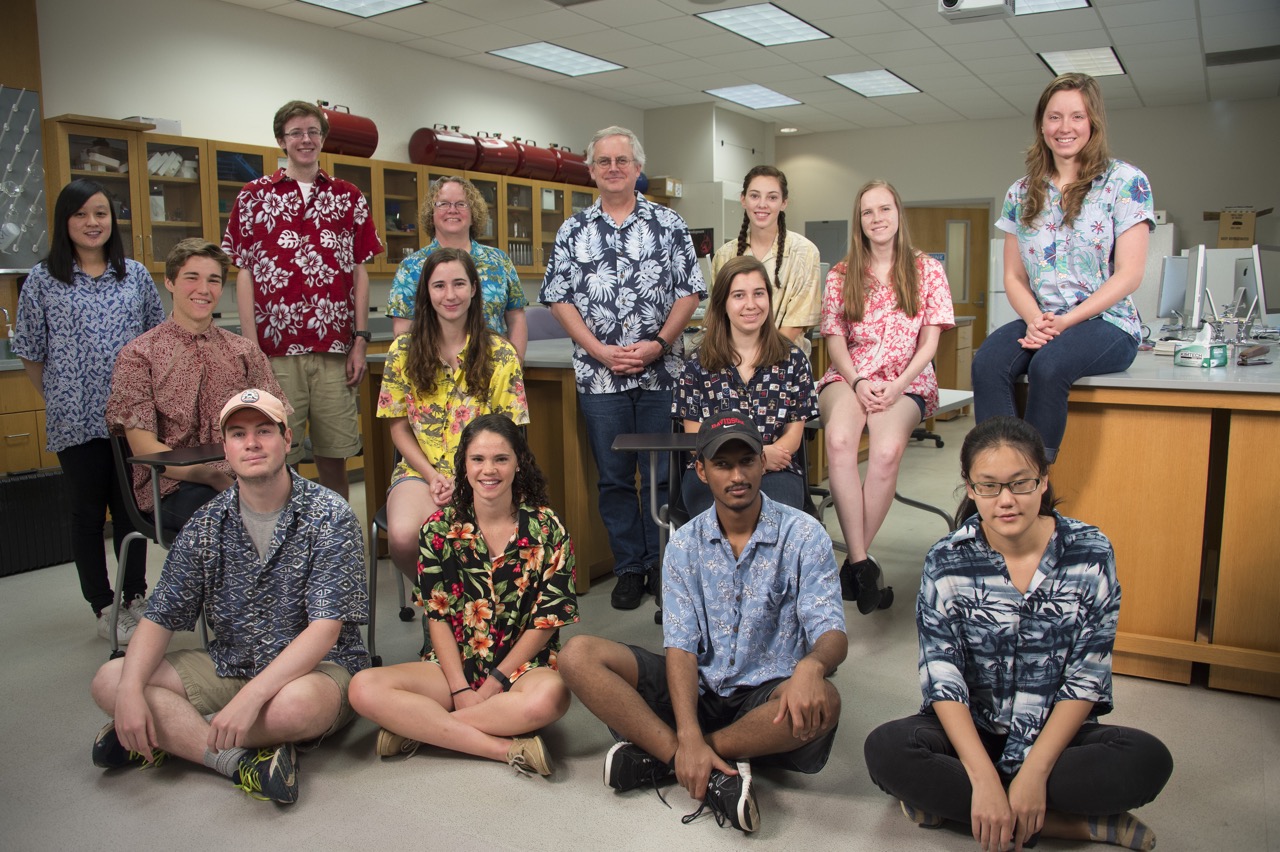
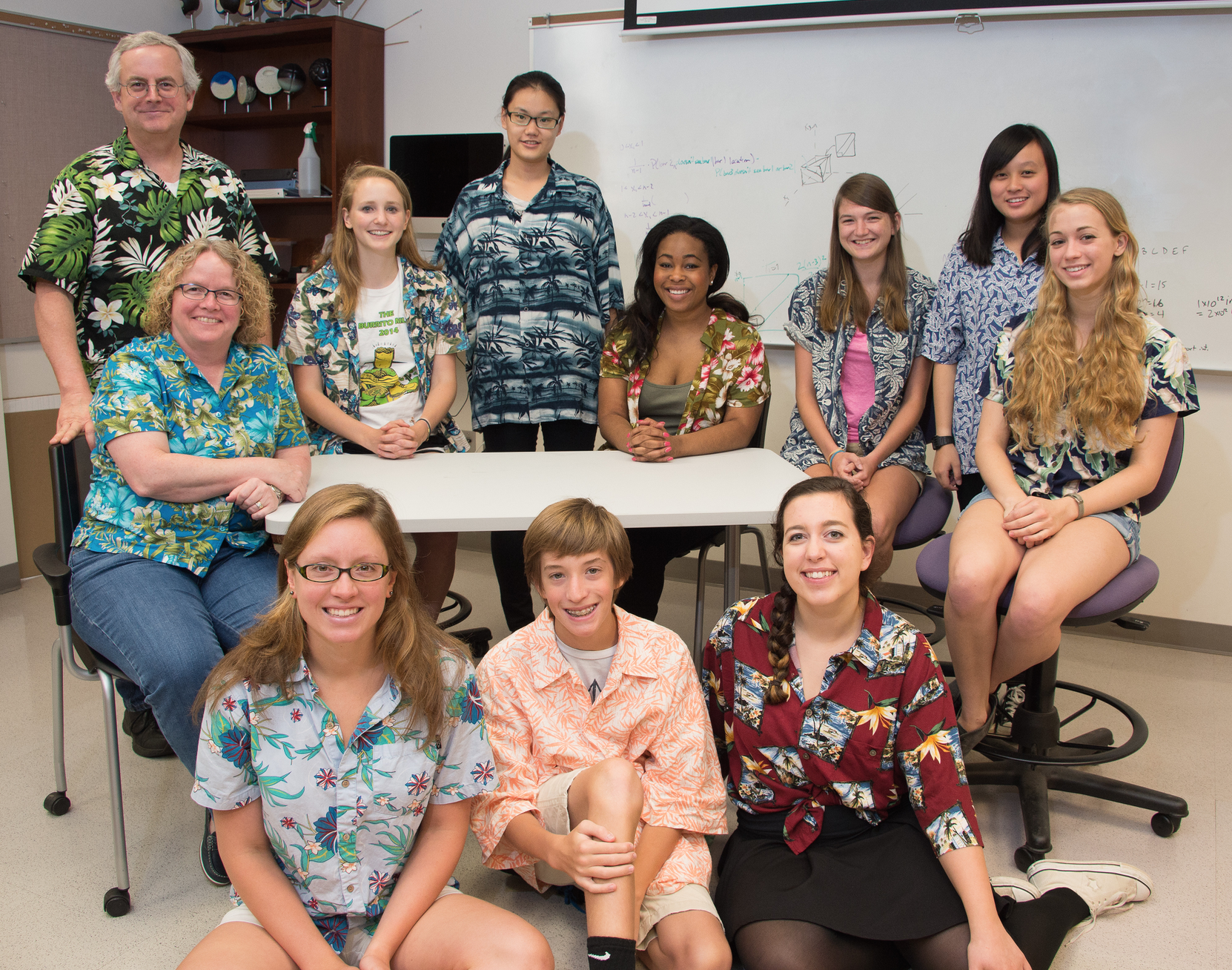
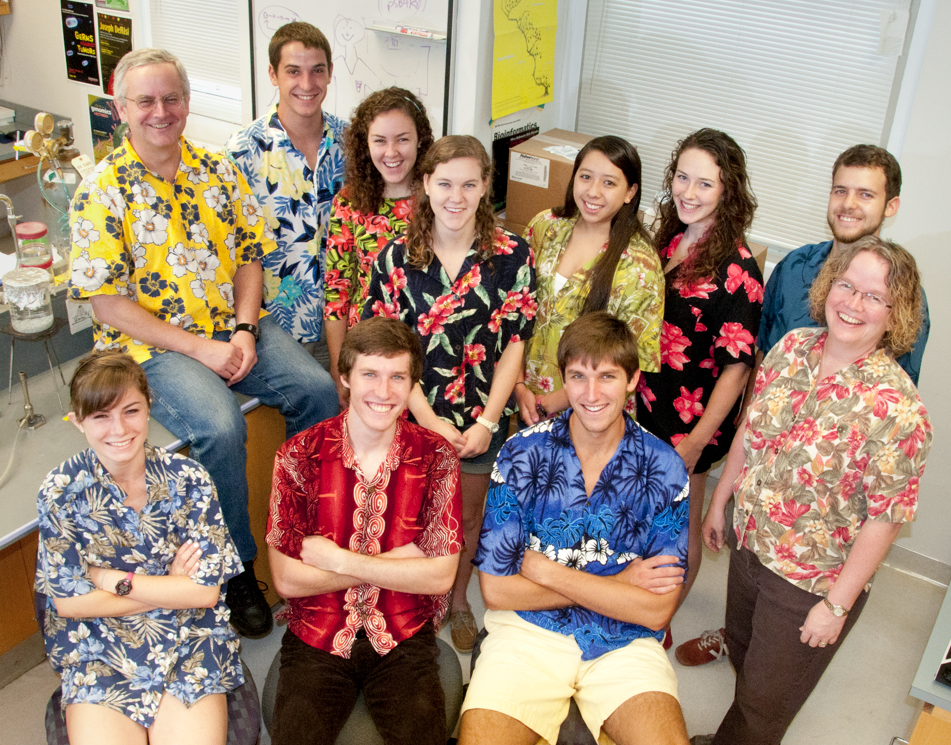
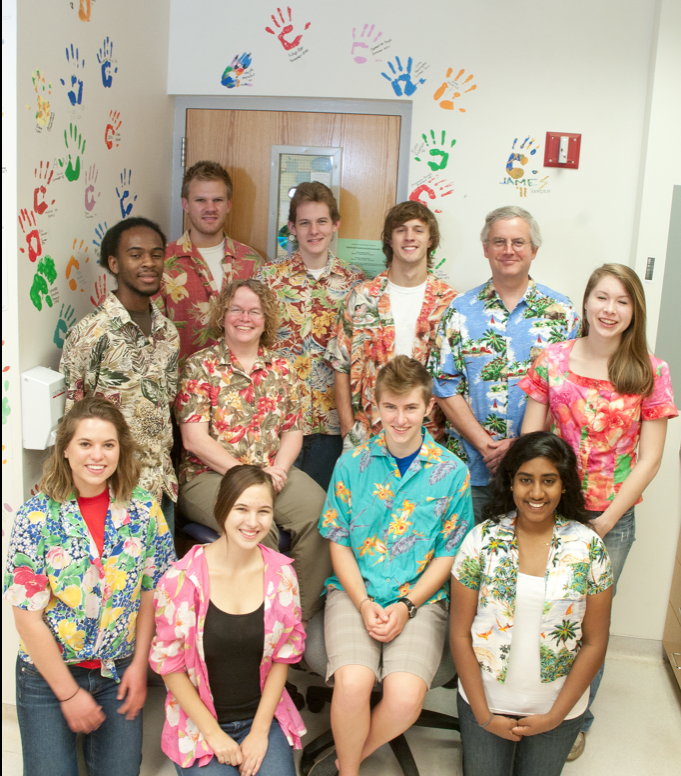
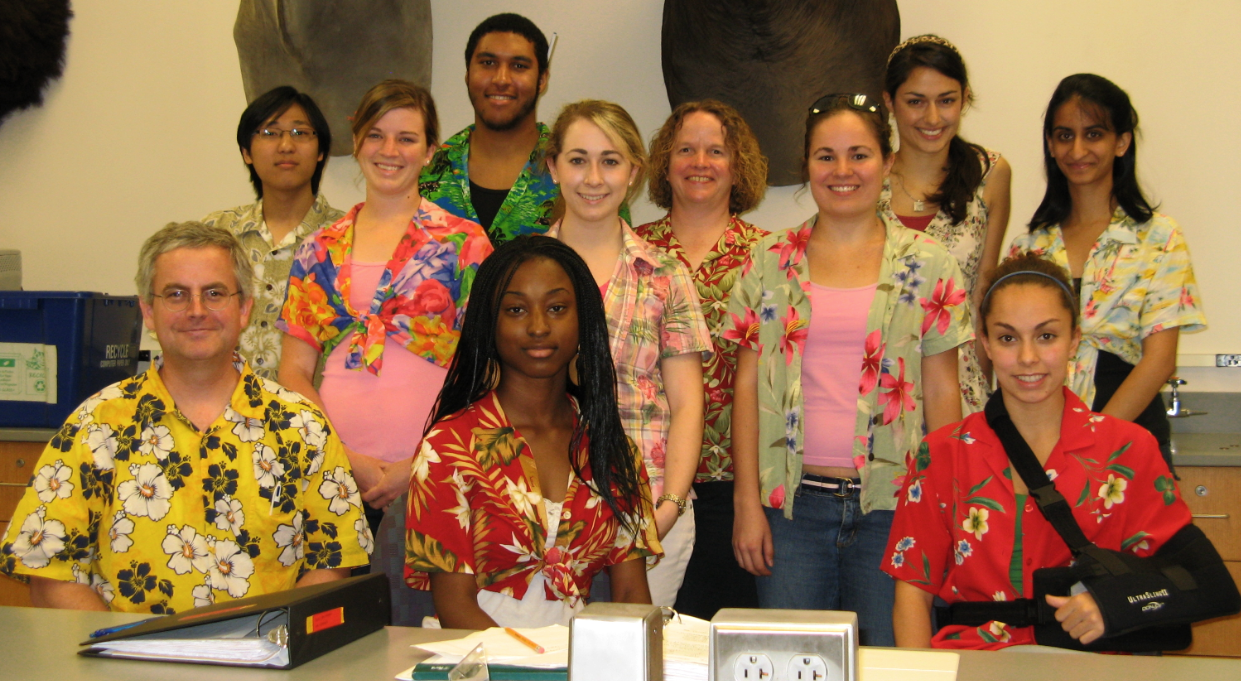
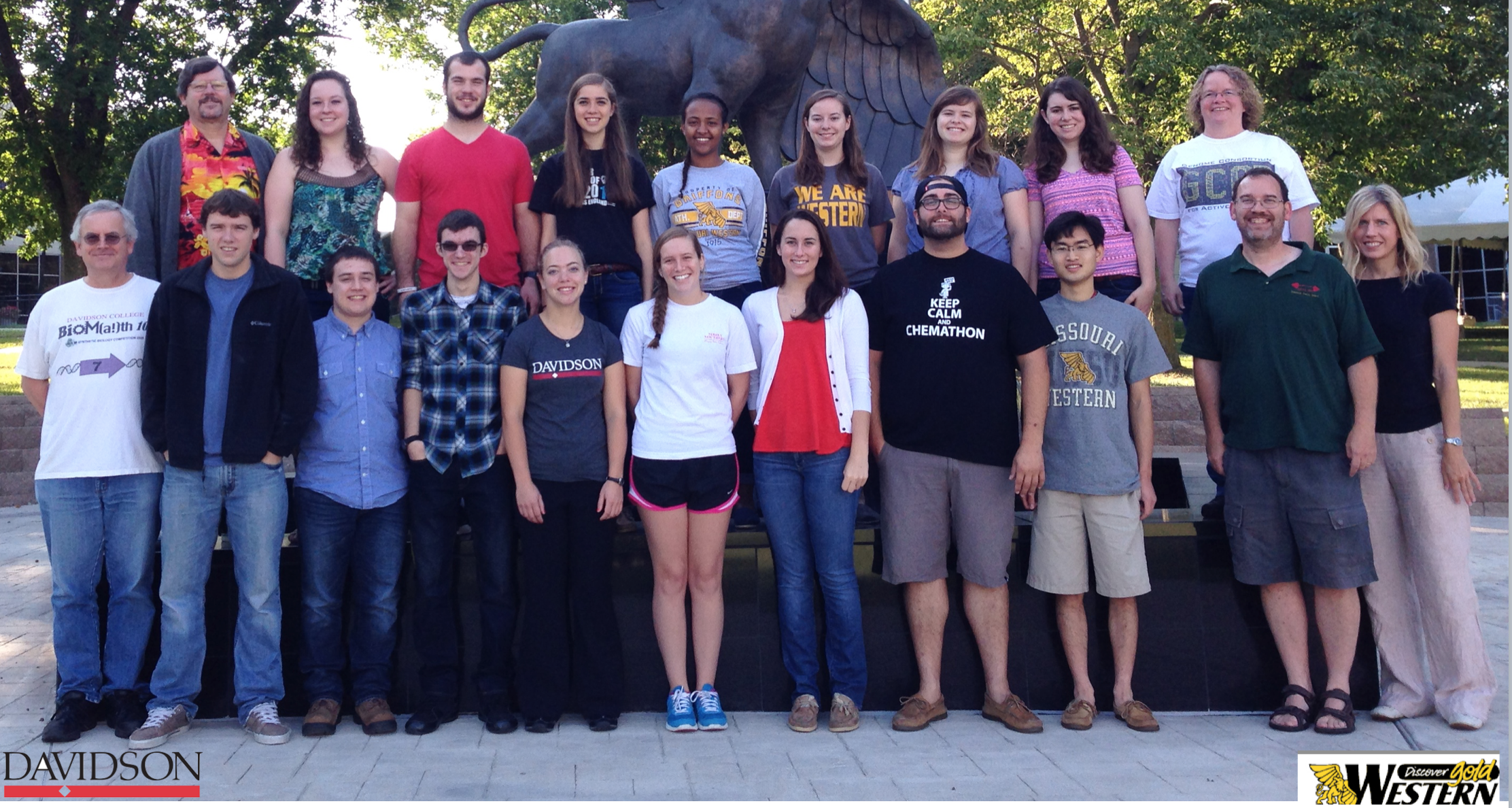
2008 Davidson College iGEM Team of Math and Biology Students
Every Friday is Hawaiian
shirt day in the town of Davidvson.
Back row: Max, James,
Samantha.
Middle row: Kelly, Erin, Dr. Heyer, Kristi, Pallavi.
Front row: Dr. Campbell, Karlesha, Madeline.
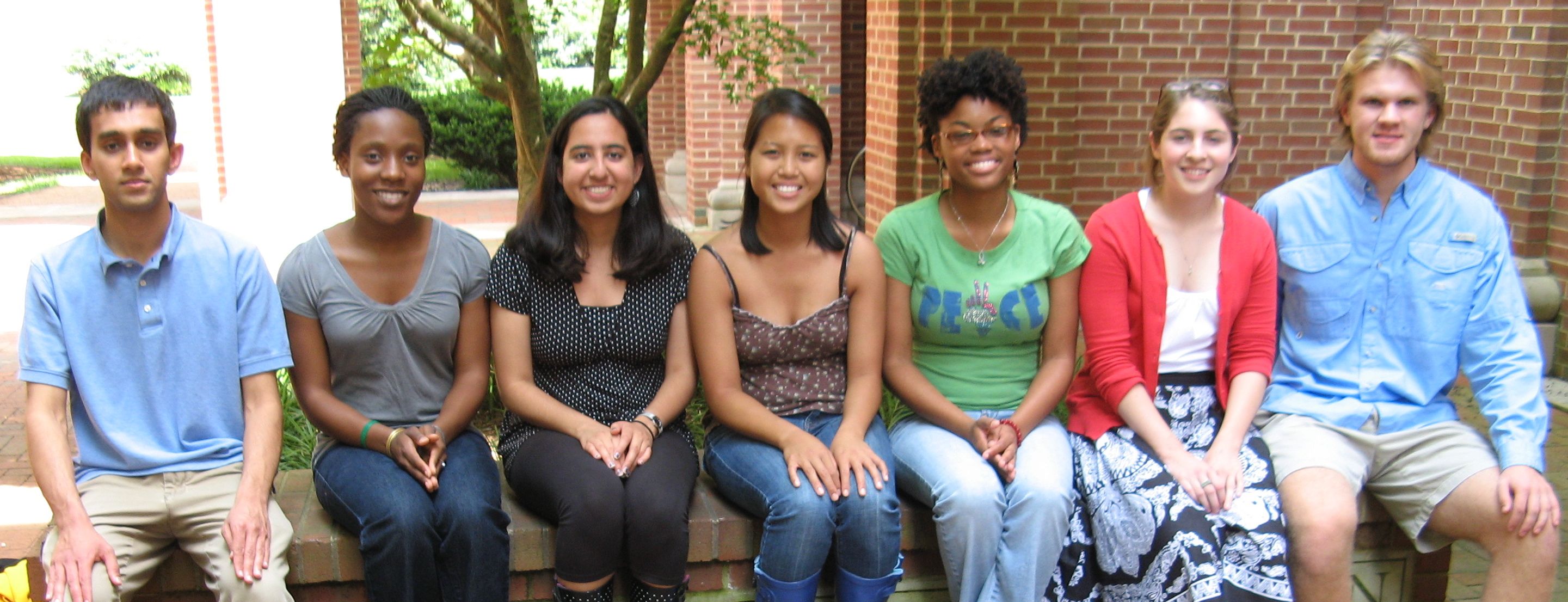
Two seniors from the class of 2009 conducted research with me. Samantha Simpson was a genomics major through the Center of Interdisciplinary Studies. Will DeLoache was a biology major who graduated with Honors in Biology.
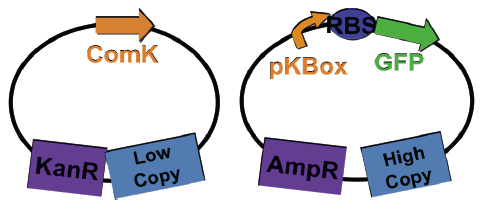
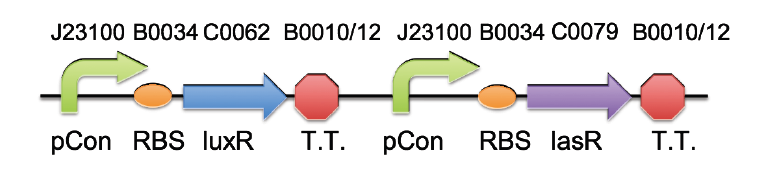
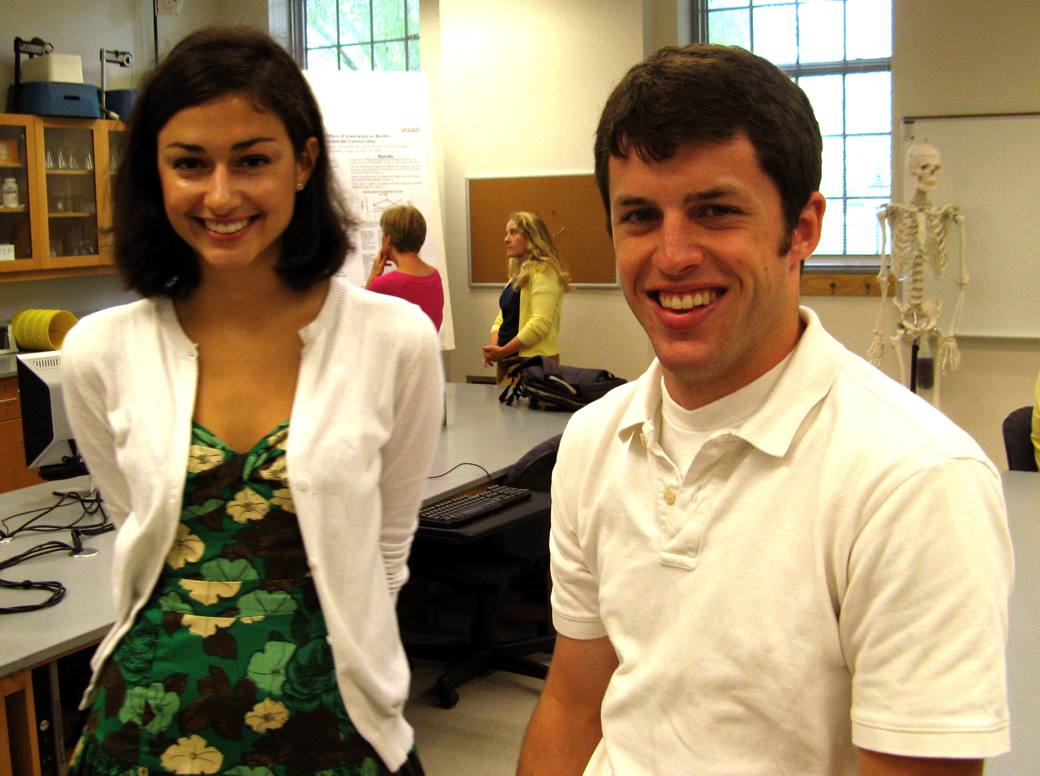
Samantha and Will, class of 2009
Science Update (AAAS) (June 25, 2008) |
||||
ComputerWorld (3 June, 2008) |
MSNBC (2 June, 2008) |
NetworkWorld (2 June, 2008) |
Scientific
American (30 May, 2008) |
Digg.com (29 May, 2008) |
Discovery
Channel (28 May, 2008) |
Skeptic's
Guide to the Universe podcast (25 May, 2008) |
NanoWerk (23 May, 2008) |
NPR Science
Friday (23 May, 2008) |
Informatica in
Brazil (23 May, 2008) |
Buzz Out Loud podcast (23 May, 2008) |
Davidson
College News (22 May, 2008) |
SyntheticBiology.net (22 May, 2008) |
Delfi in
Estonia (22 May) |
iTnews
in Australia (21 May, 2008) |
Gizmag (21 May, 2008) |
Gizmodo (21 May, 2008) |
Romanian
News (21 May, 2008) |
Science
Centric (21 May, 2008) |
OnLineWebLibrary (21 May, 2008) |
Science
Daily (21 May, 2008) |
Machines
Like Us (21 May, 2008) |
Sott.Net (21 May, 2008) |
Russian
Newspaper #1 (21 May, 2008) |
Russian
Newspaper #2 (21 May, 2008) |
ThinkGene
blog (20 May, 2008) |
Genome
Technology Online (20 May, 2008) |
Top
News India (20 May, 2008) |
Former
Soviet Union (20 May, 2008) |
Daily
Science News (20 May, 2008) |
Yahoo
News (20 May, 2008) |
Medical
News Today (20 May, 2008) |
Daily
India (20 May, 2008) |
Khabar
Express (20 May, 2008) |
innovations
report (20 May, 2008) |
SmasHits (20 May, 2008) |
AlphaGalileo (20 May, 2008) |
London
Daily Telegraph (20 May, 2008) |
Science
News (19 May, 2008) |
First
Science (19 May, 2008) |
Lab
Spaces.Net (19 May, 2008) |
Genetic
Engineering News (19 May, 2008) |
Bio-Medicine
News (19 May, 2008) |
BioCompare (19 May, 2008) |
EurekaAlert! (19 May, 2008) |
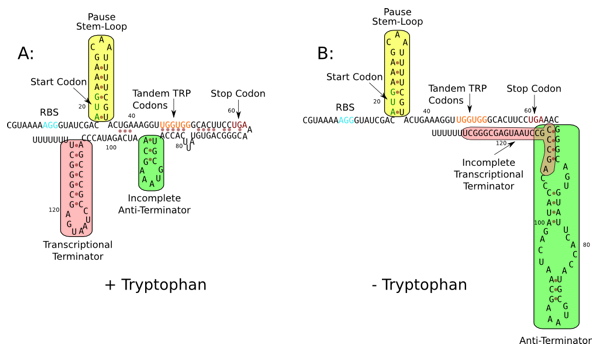
Two seniors (2008) conducted their Honors research with me in the field of synthetic biology. Andrew Martens designed a method to bring the E. coli tryptophan anti-terminator into the BioBrick Registry of parts. This part allows transcription to be regulated by the concentration of the amino acid tryptophan.
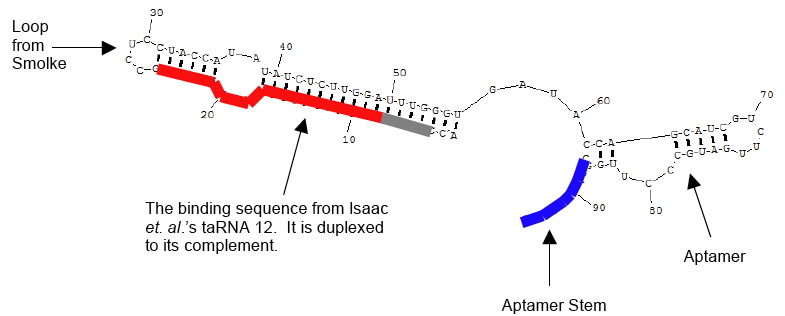
Erin Zwack designed modified anti-switches for E. coli to regulate protein production at the translation step.
For the iGEM2007
team, 6 students worked
at Davidson College (Oyinade Adefuye {NCCU student},
Will DeLoache, Jim Dickson, Andrew Martens, Amber Shoecraft
{JCSU student}, and Mike Waters) worked in collaboration
with students at Missouri Western State University to
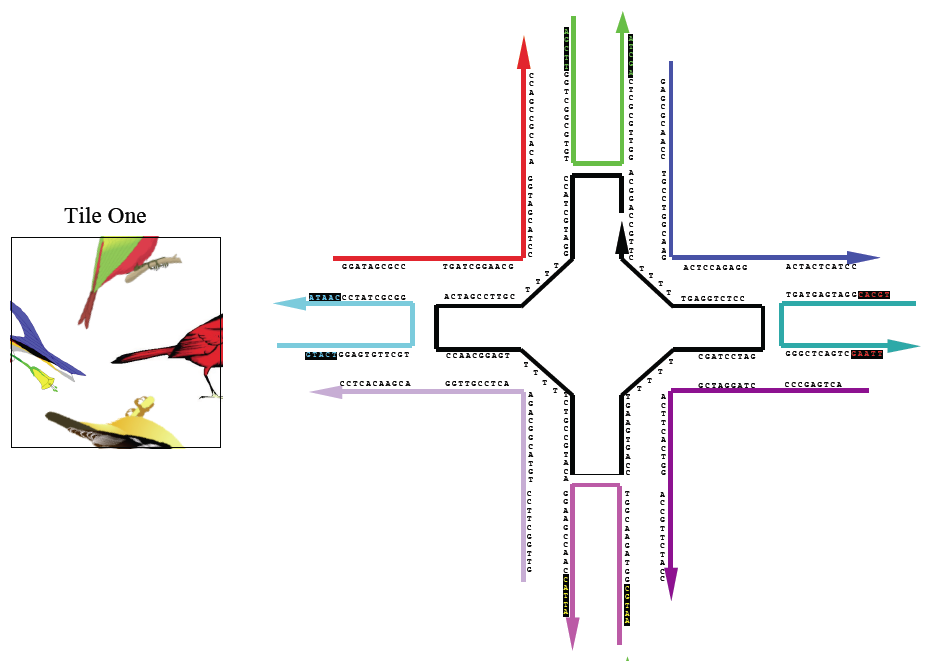
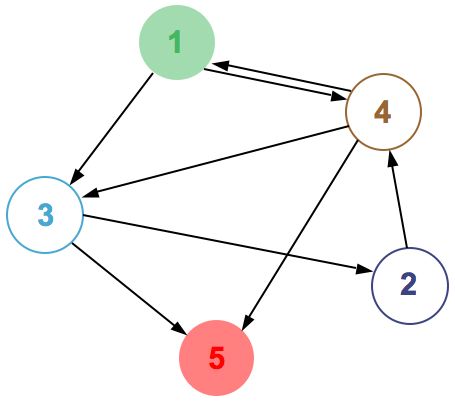
design and built a bacterial computer that could solve
the Hamiltonian Path Problem: given a directed graph
(see below), is it possible to visit every node exactly
once when starting and stopping at particular nodes?
You can
read
the
news
summary
here.
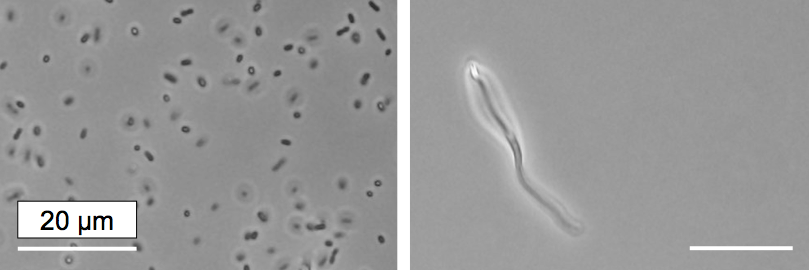
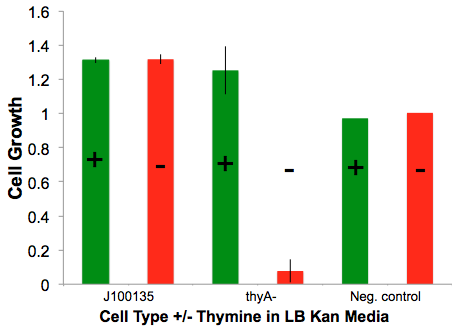
We all learned a lot, but in the end it appears we were successful in our project. Cells flipped the DNA and presented the appropriate phenotypes. You can download the PPT slide show and the PPT poster for more details.
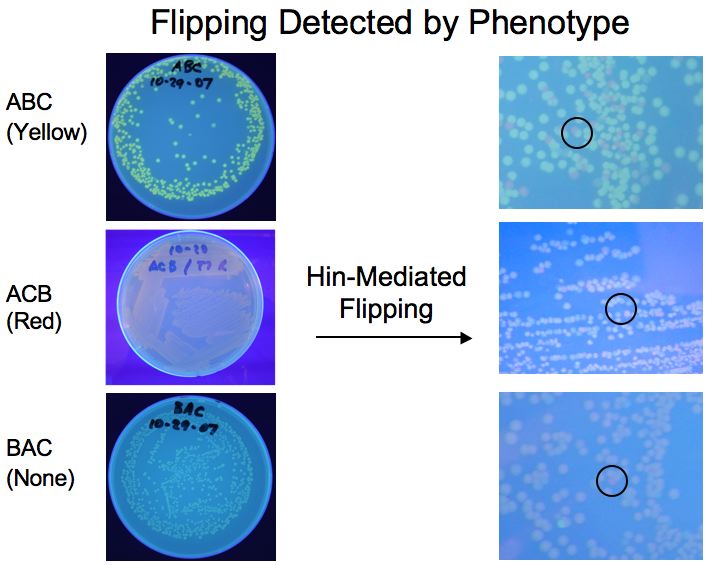
In the summer of 2006, 3 students (Erin, Sabriya, and Lance) began an exciting new project to construct an E. coli computer. You can read more about their work from the Davidson team's wiki page or viewing their iGEM 2006 presentation. The key was to integrate biology and mathematics. This project will continue in the fall of 2006 when Samantha and Karmella continue the summer work as we prepare for the 2006 iGEM competition at MIT along with our collaborators at Missouri Western State University. One product of the summer was a new web site that helps investigators synthesize short genes from a series of oligos. The web site, created by Lance, facilitates choosing the right oligos to make. Davidson won prizes in 4 categories at the 2006 iGEM competion. You can read a summary of their successes here. During the sprin semester, Karen Acker inserted Hix sites inside GFP and TetA(C) genes [read her paper] Bruce Henschen produced Hix sites that would allow only one flip [read his paper].
Students in my Genomics Methodology Course (spring 2005 & 2006) have developed what we call a "Teaching Chip" which permits students to design and print their own DNA microarray. Then using very controlled conditions that do not require the isolation of RNA or genomic DNA, they probe their own microarray and detect the signal using MAGIC Tool. This process is very robust and allows students to learn all the critical steps involved in microarray experiments, including data analysis.
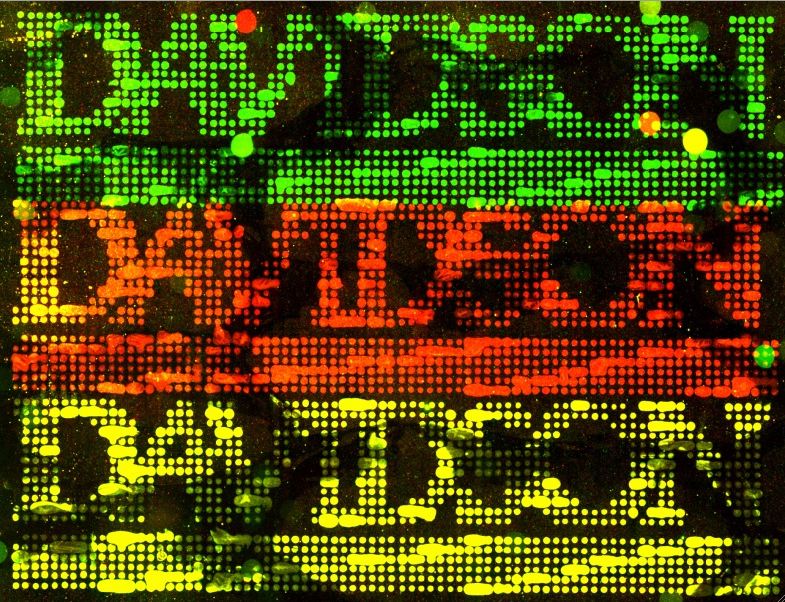
Jackie Ryan '06 developed student friendly protocols for performing comparative genome hybridization experiments. This method uses labeled genomic DNA from two different strains as probes on a yeast DNA microarray. Most spots will be yellow, but aneuploidy (duplicated or deleted DNA) will appear as either red or green spots on a microarray. This work will be continued using evolved strains of yeast induced to undergo aneuploidy by selection under limited glucose.
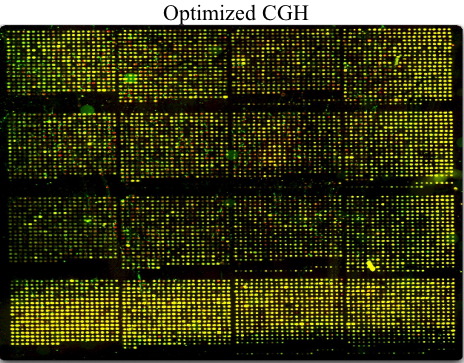
Matt Gemberling '06 has designed and built antiswitches to determine if this new method for regulating eukaryotic translation can be adapted for use in E. coli. Matt's work was part of a larger project in synthetic biology composed of six students (the Synth-Aces) who competed in iGEM2005 at MIT.
Laurie Heyer's students continue to improve the free software for DNA microarray data processing and analysis. This software is called MAGIC Tool (MicroArray Genomic Imaging and Clustering) and works on all computer platforms.
For the 2004-2005 year, Megan McDonald will continue her biophysics major research in collaboration with Dr. Dan Boye of the Davidson Physics Dept. Megan is using optical tweezers to determine the physical topology of DNA printed on glass slides. I am also beginning a project to simplify the DNA microarray protocol enough for high school students to perform exercises that introduce them to the methodology.
In 2003-2004, Gray Lyons completed his honors research project. The lab work was performed at the University of Alabama at Birmingham.Danielle Choi performed two pilot studies with DNA microarrays. In collaboration with Dr. Jef Boeke at Johns Hopkins University, she produced the first yeast bar code DNA microarrays printed on glass slides and worked out hybridization conditions for the probes. She also produced microbial identification DNA microarrays in collaboration with Dr. Brad Goodner at Hiram College. I also helped produce an animation on DNA microarrays.
During 2002-2003, Emily Oldham, John Kogoy and Dan Pierce conducted research in my lab. Emily and Dan worked on improving the signal to noise ratio of DNA microarrays. John conducted some preliminary studies in proteomics.
In the 2001-2002 academic year, Emily Oldham began her genomics concentration through Davidson's Center for Interdisciplinary Studies under the guidance of Laurie Heyer and me. Laurie and I also finished the genomics textbook writing project.
I spent my sabbatical at the University of Washington in
Seattle and the Institute for Systems Biology to genomics and develop a course
for undergraduates, during the 2000-2001 academic year, . This new
course in genomics for undergraduates was offered for the first time during
the fall of 2001. Furthermore, I have created a new non-profit educational
consortium called the Genome Consortium
for Active Teaching (GCAT).
GCAT
is dedicated to bringing genomic methods into the undergraduate laboratory
curriculum at a reasonable cost.
During the 1999-2000 academic year, one of my honors
students will be conducting research in the new and very exciting field
of bioinformatics. Rahul Karnik '00 is a Biology major and is also working
on a concentration in computer sciences. For the summer of 1999, he worked
at TIGR (The Institute for Genomic Research)
in Maryland. He is currently working at a pharmaceutical company as the link
between the biologists and the computer scientists.
I have been conducting research to improve teaching methods. I work with students and use the web to improve the quality of my lecture and lab curricula. The web provides a medium for presenting visual information that cannot be presented any other way.
One student conducted her honors research to develop a project-based semester long laboratory course for Molecular Biology.
I have also redesigned my Molecular Biology curriculum, and as well as Introductory Biology.
I have developed interactive animations and image maps
for teaching immunology.
For this, I have created "Molecular
Movies"
and "Hyperlinked
Human
Histology".
For several years, we have been examining proteins involved
in mating of the unicellular green alga called Chlamydomonas. We have
generated two mutant strains (iso1 and
pmh1 ) that display abnormal mating
phenotypes. Several Davidson College students have helped identify the molecular
cause for the pmh1 mutation and this work is being submitted for publication
(see virtual posters below).
Another area of interest in my lab has been the purification
and characterization of NADP+-dependent enzymes from Chlamydomonas
(click here for a list of examples).This work
has been conducted in collaboration with Dr. John Williamson, also in the
Biology Dept. We have had several student conduct research in this area.
During the 1998-99 academic year, one of my students wanted to isolate the protein(s) that bind to a new drug being tested for use in treating Alzheimer's disease. His honors thesis research involved Dr. Brown of the Chemistry Dept., as well as Dr. Williamson and me. This new area of investigation was awarded first prize at the Collegiate Academy of the North Carolina Academy of Sciences 1999 annual meeting.
Links to Virtual Posters:
Physical Properties of DNA on Microarrays (work in progress)
Examining Accuracy and Precision of DNA Microarrays (1 MB PowerPoint file)
Exploring the Use of Plasmids in DNA Microarray Technology (1 MB PowerPoint file)
Proteomics Modules (web site - requires chime plugin)
Helping Students Discover Genomics, Proteomics and Bioinformatics. (4.4 MB PDF file)
Comparison
of the Use of Plasmid and PCR DNA on Microarray Chips
(1 MB PDF file)
Current Teaching Interests:
| Bio111:
Introductory Biology (Cell and Molecular) |
Bio111
Lab: Introductory Biology (Cell and Molecular) |
| Bio304: Molecular Biology | Bio304 Lab: Molecular Biology Lab |
| Bio309: Genomics, Proteomics and Systems Biology | Bio343
Laboratory Methods in Genomics (new spring 2005) |
| Bio307: Immunology (spring 2006 last time) | Concentration
in Genomics (new fall 2004) |
| Seminar
in Synthetic Biology (new fall 2007) |
Group
Investigation in Synthetic Biology (new fall 2005) |
Send comments, questions, and suggestions to: macampbell@davidson.edu
or (704) 894 - 2692 © Copyright
2007 Department of Biology, PO Box 7118, Davidson College, Davidson,
NC 28035